
Do You Need a Permit to Replace an AC in California?
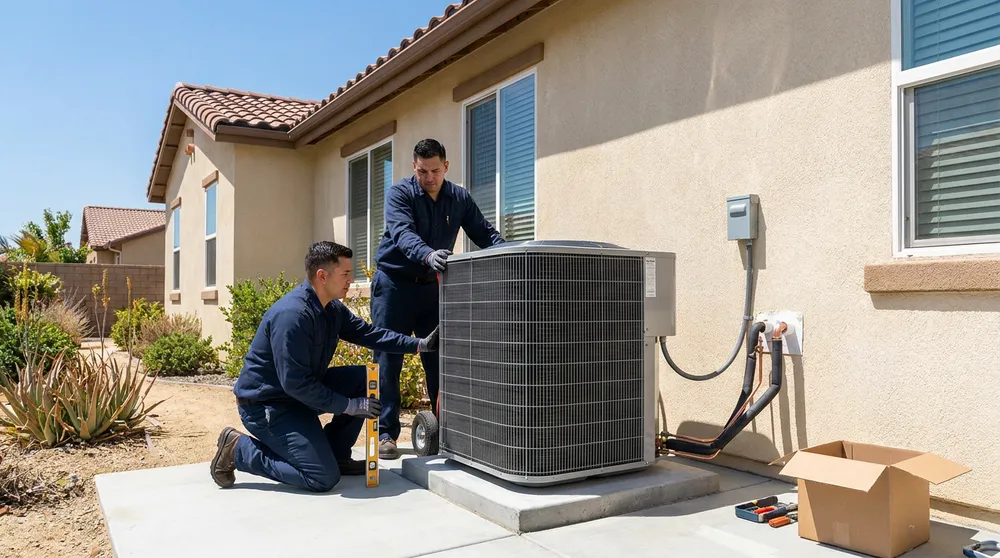
Yes. California almost always requires a permit to replace or install a central AC. This is true even for a like-for-like swap. The job has to meet the current Title 24 energy code. Which office issues the permit depends on your city. A Whittier address goes through the city itself. Hacienda Heights goes through LA County instead.
That surprises a lot of homeowners. Most people think a same-size swap skips the paperwork. It does not. Here is who issues the permit in our area, and what can hold it up.
Do you need a permit to replace an AC unit in California?
Yes, in almost every case. City HVAC guides across California say this plainly, including the City of Menifee's. A permit is required to install a new AC. A permit is also required to replace an old one. The rule is not about whether the unit is new to your house. It is about whether the system meets code right now.
Code changes over time. Your AC does not change on its own. A permit is the paper trail that proves this system, installed on this date, was checked against today's rules.
Is a like-for-like AC swap exempt from a permit?
No. Putting the same size and brand back in the same spot is still a changeout. It gets permitted just like a first-time install. California has no size or brand exemption for central air.
There is one real exception. A plug-in portable unit skips the permit. So does a window unit in an existing window. Most homeowners here are not replacing either of those.
Which office issues the permit where The Cool Guy HVAC works?
It depends on your city. Two towns in our area show why. Take Whittier first. It is its own incorporated city, so it permits your AC in-house. You file the application, pay the fee, and book the inspection at its own Building and Safety Division, never through the county.
Hacienda Heights works differently. It is unincorporated LA County land, not its own city. Its permits come from LA County Public Works Building and Safety instead. You apply through the county's EPIC-LA portal. Same trade. Same kind of job. Two different offices. Two different timelines.
That is why a full AC installation quote from us always names the office pulling your permit. If a bid never says which office, ask before you sign.
Why does Title 24 duct testing hold up the permit?
Because the mechanical inspection alone does not close a California permit. State code, called Title 24 Part 6, adds one more step. If a job replaces or adds more than 40 linear feet of duct, an independent tester has to check it. That tester is a HERS rater, certified by the California Energy Commission. Ducts can leak no more than 15% of the air at a set test pressure. The result gets filed to the state before the permit can close.
If the ducts fail, the permit stays open. Someone has to reseal the ducts. Then a retester has to check them again. That is a real reason a permit can run past your install date. Ask about this step up front. It matters even more if you are weighing a ductless mini split instead, since that route skips old ductwork entirely.
Who has to be licensed to pull the permit?
California requires a state license to do this work. The classification is C-20, for warm-air heating and air conditioning. Refrigeration work can fall under C-38 instead. Both come from the Contractors State License Board.
This is not a formality. The permit application asks for the hired contractor's license number. An unlicensed contractor cannot legally be named on that permit, no matter who applies for it.
The Cool Guy HVAC is licensed and insured. Owner Vincent Galicia has 10 years of hands-on HVAC experience. That covers everything from small repairs to full system installs.
What happens if you skip the permit?
The AC still runs. What you lose is the record. That record proves the electrical, refrigerant, and duct work passed inspection. The gap can surface later, at the worst time. A home sale is one example. A buyer's inspector or the escrow company can ask for permit history. An insurance claim is another. An insurer can question an unpermitted system after a loss.
Skipping the permit skips the inspection too. That inspection exists to catch real problems. A bad refrigerant charge is one. A miswired disconnect is another. Ducts that leak too much air are a third.
Get a written quote with the permit already priced in
Every estimate from The Cool Guy HVAC states the permit line. It also states which office is issuing it. We quote the job in person and put it in writing. Nothing about the permit or the duct test shows up as a surprise later. Get your free estimate and we will tell you what your address needs.
Already have a bid that never mentioned a permit? That is worth a second look. Ask us for a second opinion before you sign. Or read what a full installation actually costs in this part of California. We cover Whittier and the surrounding San Gabriel Valley towns. Every job we do gets permitted the right way. Reach out to The Cool Guy HVAC to get scheduled.
Talk to The Cool Guy HVAC
Questions about your HVAC job? We serve La Puente and the surrounding area with honest, upfront advice.
Related articles
FAQ
Related questions
Is a like-for-like AC replacement exempt from a permit?
No. Same size, same brand, same spot is still a changeout. It still needs a permit under California code. The permit checks that the new equipment and any duct work meet today's Title 24 rules, not the rules your house was built under. Same box. Same paperwork.
What happens if you install an AC without a permit?
The system runs. But there is no inspection record that the electrical, refrigerant, and duct work were done to code. That can slow down a home sale, since a buyer's inspector or the escrow company can ask for it. An unpermitted install can also affect an insurance claim if something goes wrong later.
Who pulls the permit, the homeowner or the contractor?
Almost always the contractor, as part of the job. The permit form asks for the installer's license number. A licensed HVAC contractor applies, books the inspection, and closes it out. A homeowner who does the physical work themselves can instead sign as an owner-builder, but California law then puts full responsibility for the permits, the inspections, and any subcontractors on the homeowner, not a contractor.
How long does the permit stay open on a California AC job?
Until the final inspection passes. A simple changeout with no duct work can close in one visit. If more than 40 linear feet of duct is new or replaced, the Title 24 duct test has to pass first. A failed test means a return trip to reseal and retest.